Key points
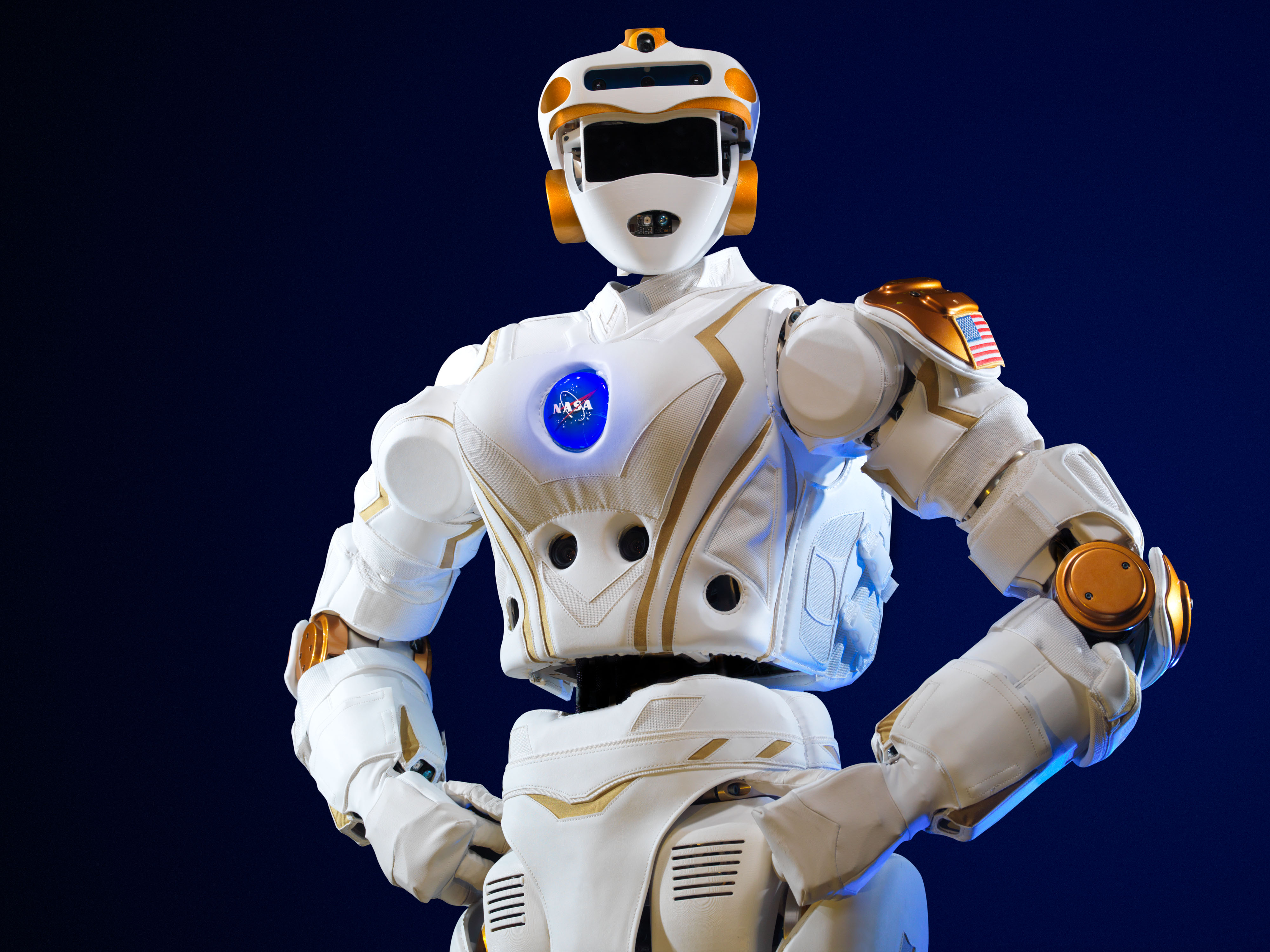
- NASA lists Valkyrie at 6 ft 2 in tall and 300 lb.
- The platform has 44 degrees of freedom and a 1.8 kWh battery.
- NASA describes the battery configuration as providing about one hour of operation.
This explainer is based on NASA’s published R5 technical material. RoboMag has not physically tested Valkyrie.
Built for damaged human environments
NASA says Valkyrie was designed as a rugged, entirely electric humanoid capable of operating in degraded or damaged human-engineered environments. The Johnson Space Center team built the original system for the 2013 DARPA Robotics Challenge Trials.
That context matters: Valkyrie is a research platform, not a consumer product or a machine with a published commercial availability date.
A serviceable humanoid architecture
NASA documents mechanical and electrical quick disconnects in the arms and legs. The design supports shipping and service, while the forearms combine wrist actuation with six finger-and-thumb actuators.
The official specification lists 44 degrees of freedom, two Intel Core i7 computers and a 1.8 kWh battery. These are agency-published figures, not independent performance measurements.
What remains unknown
NASA’s public R5 page does not provide the kind of commercial data a buyer would expect, such as price, general availability or a production support programme. RoboMag therefore leaves those fields unknown rather than inferring them.
Primary sources
- R5 — NASA’s Valkyrie robotNASA · accessed 19 September 2026
- NASA Images and Media Usage GuidelinesNASA · accessed 19 September 2026